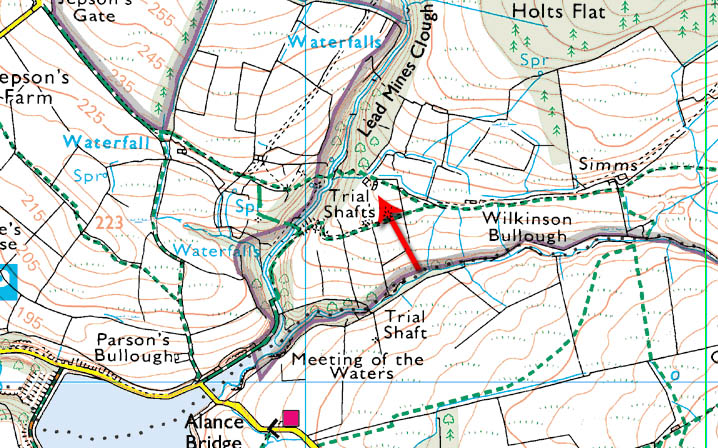
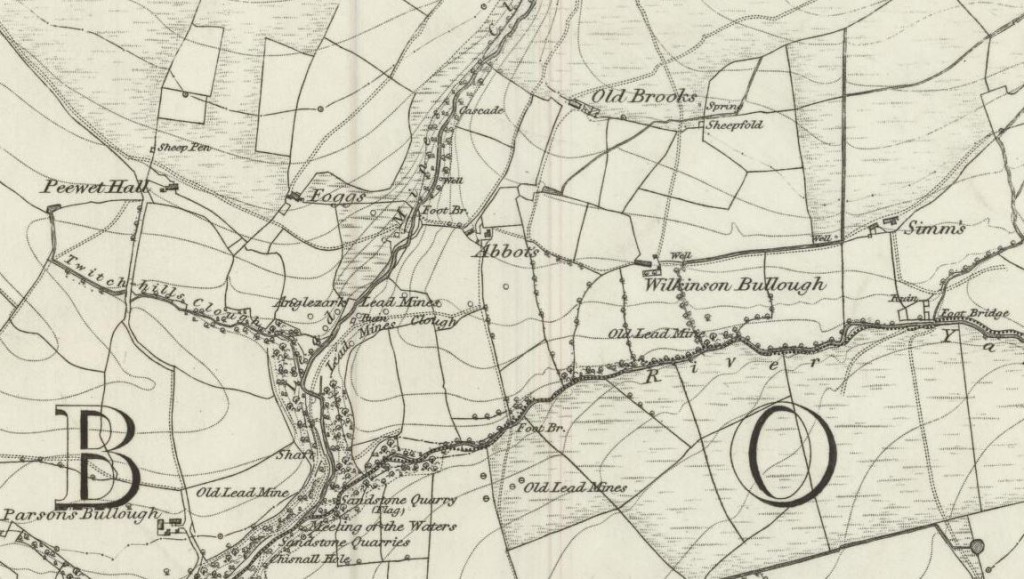
Abbott’s Farm stood on the moors above Anglezarke, close to Lead Mines Clough. The name derives from the Abbott family, who were long associated with the area and with the church at Rivington.
Richard Abbott was one of four Puritan ministers of Rivington between 1647 and 1662. Earlier records show him as churchwarden in 1625, when he was threatened with excommunication if he failed to collect fees due to Bolton Parish Church.
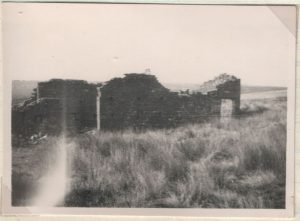
The ruin is no longer labelled on modern maps, but its presence is confirmed in Fergusson’s Short History of the Township of Rivington and in Thomas Hampson’s History of Rivington with Lists of the Clergy (1893).
Families & Residents
Richard Abbott’s role as churchwarden brought him before the Ecclesiastical Court in 1626, accused of refusing to gather church levies. The record states that he was “threatened with excommunication if he did not collect the fees due to Bolton Parish Church.” He was given a suspended sentence, conditional on collecting the dues within two months.
Later, in 1641, he was referred to as a husbandman — a small tenant farmer — while still involved with the church.

By 1696, John Abbott of Anglezarke was listed as churchwarden, and he remained resident for at least twelve years. Other Abbotts recorded in the area include George, James, and Reverend Thomas.
In the nineteenth century, the Pilkington family became associated with Abbott’s. Samuel Pilkington, born in 1819, worked as a stone quarryman by the age of thirty‑two. He lived at Old Brook’s Farm in 1861, before moving to Abbott’s with his wife Charlotte Webster, a hand‑loom cotton weaver. Their presence reflects the dual economy of farming and weaving that sustained many families on the moors.
Farming & Daily Life
Abbott’s was farmed alongside Simms from 1848, with records showing 27 acres attached to the property. Families here combined farming with weaving and quarrying, reflecting the mixed economy of the moors. Charlotte Webster likely continued weaving even after moving to Abbott’s, while Samuel worked in the quarry.
Architecture & Features
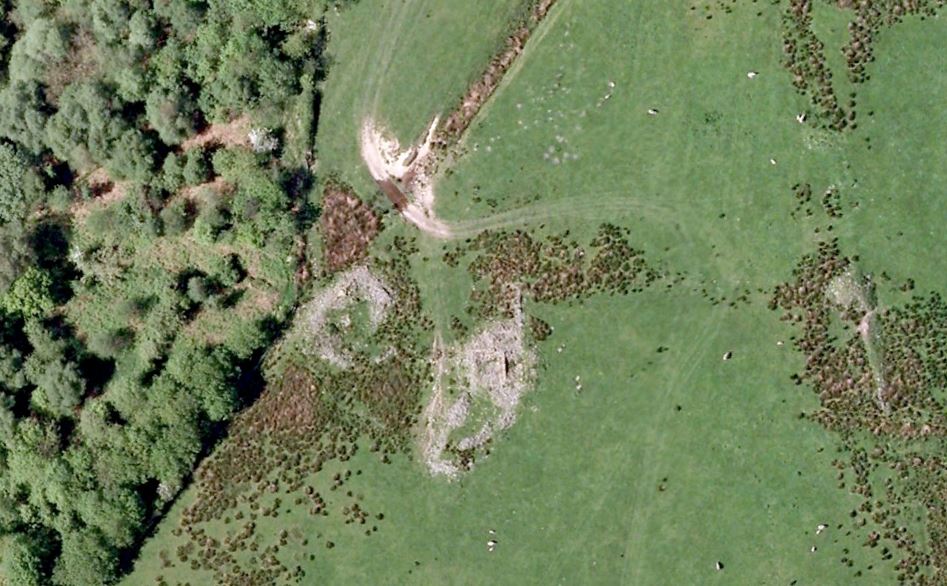
Property leases confirm the acreage and layout of Abbott’s. The farm was typical of upland holdings, with stone walls, barns, and shippons. Aerial evidence and ground surveys still reveal outlines of the ruin, though it is less prominent than some of the neighbouring sites.
Decline & Ruin
By 1897, rents at Abbott’s had dropped to 66 percent, reflecting the wider agricultural decline across Anglezarke.
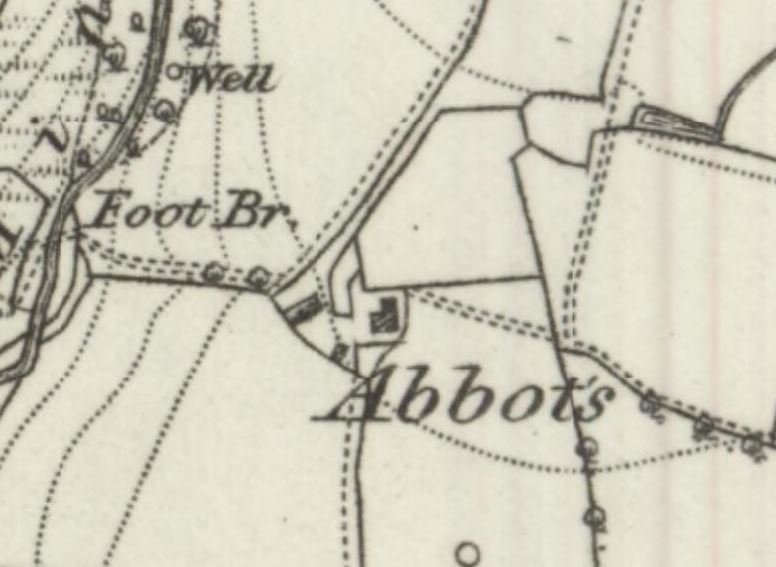
In 1936, the farm was described as “in a very ruinous state, and evidently not as large as many of the other farms.” Its position off the beaten track spared it from complete destruction, but abandonment was inevitable once Liverpool Corporation acquired the land for water catchment.
Present Day
Abbott’s remains one of the quieter ruins of the moors. Though less substantial than others, its stones still mark the outlines of a farmstead tied to both the Abbott and Pilkington families. The site is a reminder of the deep connections between farming, weaving, quarrying, and the church in Anglezarke’s history.