Fogg’s Farm stood near Peewet Hall on the Anglezarke moors. The property was farmed by members of the Cocker family in the 1700s, including the famous Moses Cocker, remembered for his flying machine. At that time, the farm comprised thirty‑four acres.
By 1824, Thomas Pilkington was resident at Fogg’s. The Pilkingtons also lived at Drinkwaters, another landmark farm near Great Hill, showing how the family spread across multiple holdings in the area.
Families & Residents
The census of 1851 records that handloom weaving was an occupation at Fogg’s, subsidiary to farming. Ten years later, the farm was occupied temporarily by quarrymen. The property continued to be lived in until around 1910, when the last inhabitants departed.
In 1923, G. M. Dixon gave up the land. His letter to the authorities survives, addressed to the Lord Mayor, Alderman, and Citizens of the City of Liverpool. He wrote:
“I give notice to quit all lands I hold under Liverpool Corporation on February 2nd, 1923….. owing to the high rates and the heavy slump in prices, especially wool, the chief thing on a hill farm.”
This statement captures the economic pressures that forced many upland farmers to abandon their holdings.
Farming & Daily Life
Fogg’s was typical of the upland farms, combining weaving with sheep farming. The land was rich in birdlife, with curlew and lapwing noted as frequent in spring. The farm’s track shifted over time, with records noting that “the track to the right of the ruins was previously to the left,” reflecting changes in access routes across the moor.
Architecture & Features
The barn at Fogg’s was still standing on 1 August 1925, when four men sheltering inside were caught in a dramatic incident. Lightning struck the barn, setting fire to the hay stored within. The men were uninjured, but the barn and its contents were totally destroyed.
By 1936, nearly all of the roof had fallen in, though most of the walls were still standing. The farm was described as having “no particular striking features,” yet its survival into the twentieth century made it one of the more enduring ruins of Anglezarke.
Decline & Ruin
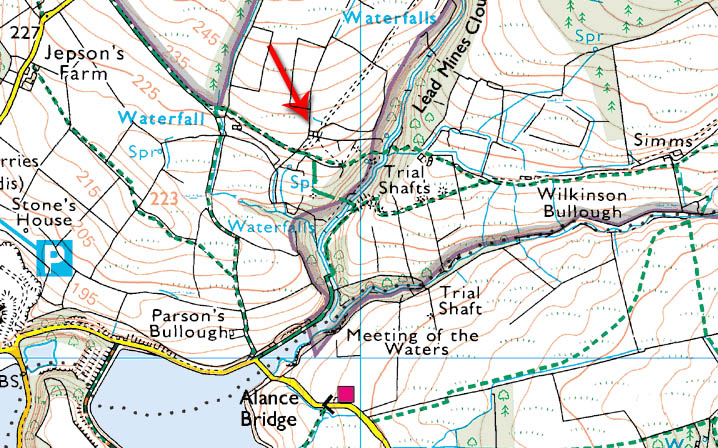
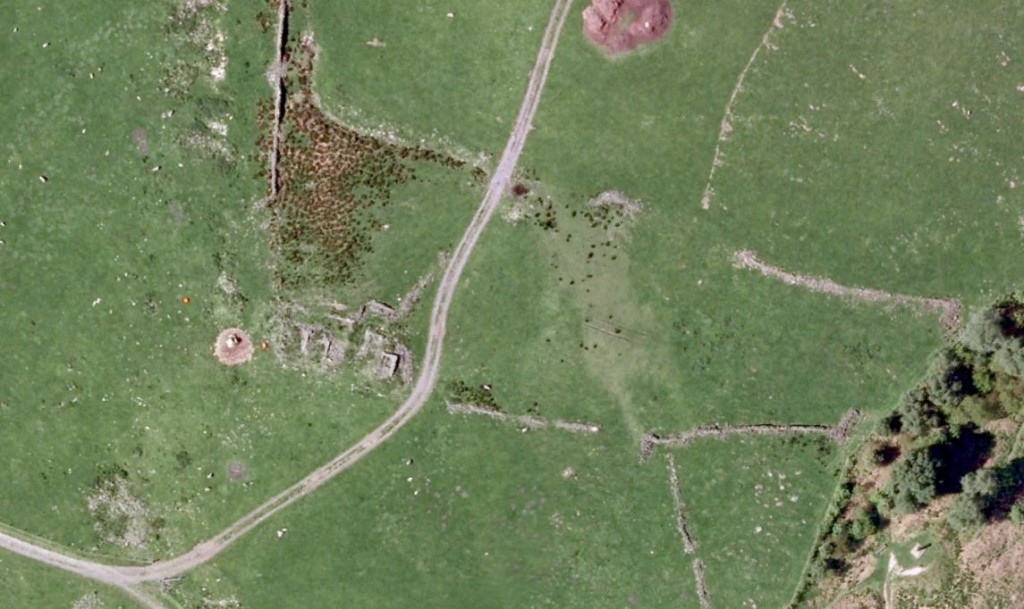
After Dixon’s departure in 1923, the farm was left to decay. The lightning strike of 1925 accelerated its ruin, and by the mid‑1930s it was already collapsing. The name “Fogg’s” has since disappeared from modern mapping, though its outlines remain visible in aerial surveys.
Present Day
Today, Fogg’s lies in a field well populated in spring with curlew and lapwing. The ruins are modest, with walls still traceable but roofs long gone. The site forms part of the wider belt of ruins around Lead Mines Clough, each telling its own story of farming, weaving, quarrying, and eventual decline. Though the name has vanished from maps, Fogg’s endures in memory and record, a reminder of the families who lived and worked here.