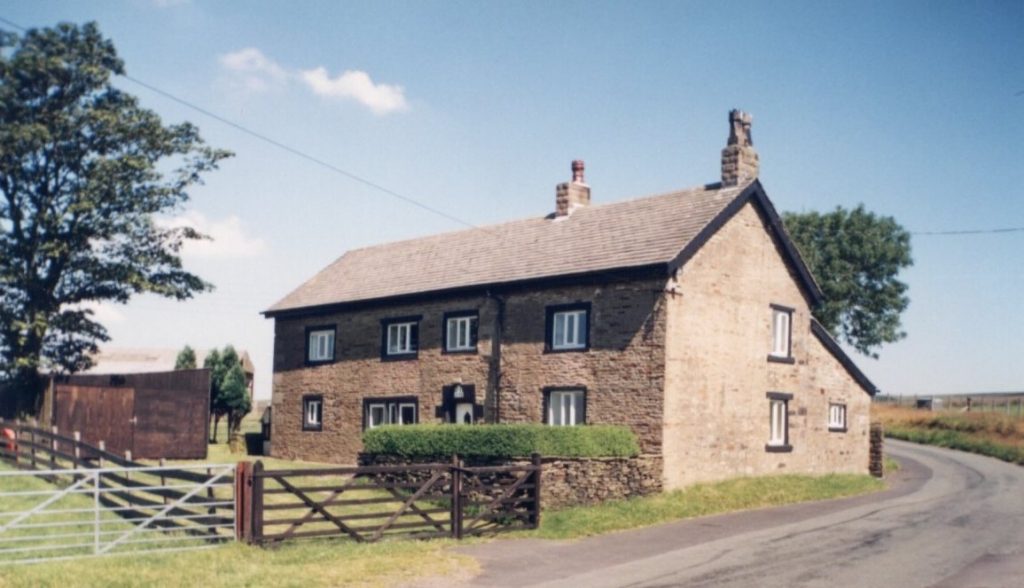
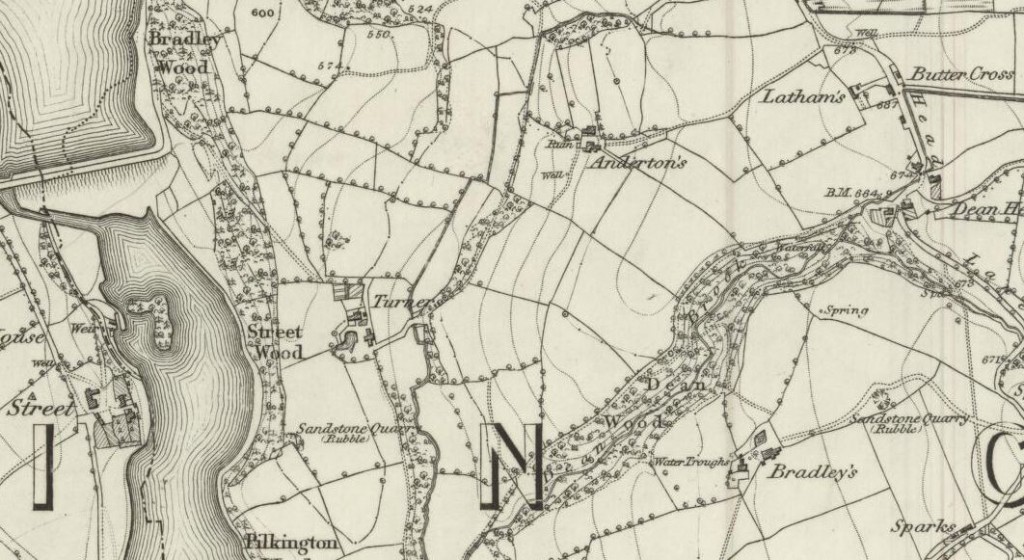
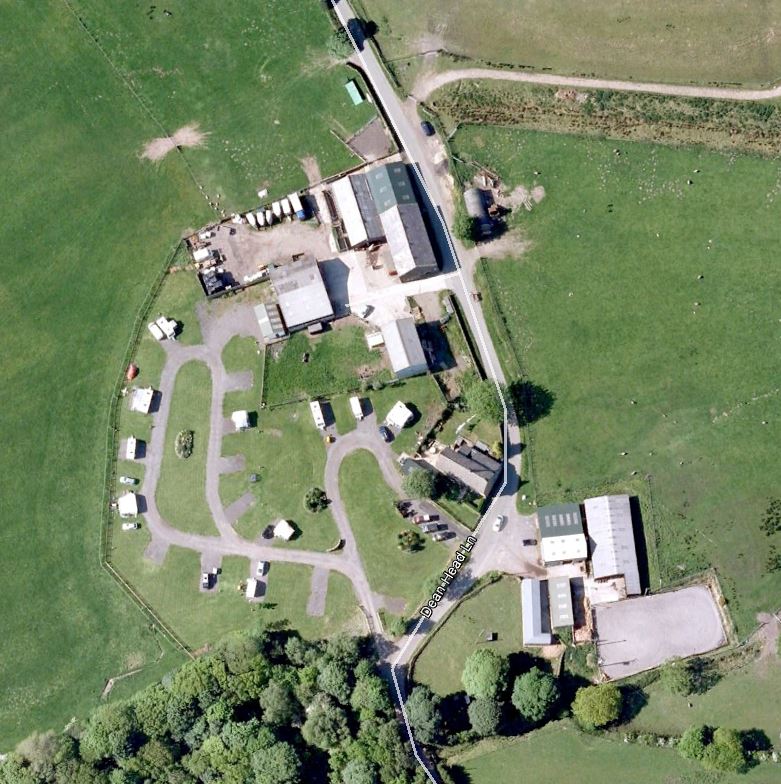
Latham’s Farm stood on Dean Head Lane, Rivington, later incorporated into the grounds of Wilcock’s Farm campsite. The Bolton Chronicle of 20 October 1860 reported the sale of farming stock, equipment, and furniture at Latham’s by William Barlow. Two years later, in July 1862, the site was advertised to be let by ticket on 12 July, described as “12 acres with House, Barn, Stable, Shippon (cattle shed) and other outbuildings together with a pew in the church.”
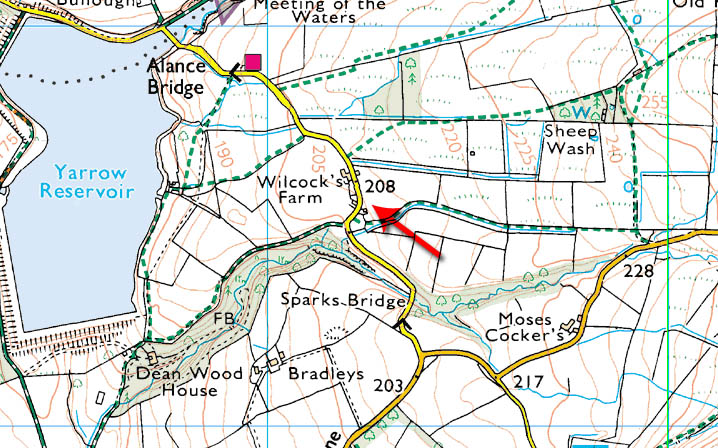
The last tenant recorded was William Guest. Original mapping also shows a site called Butter Cross nearby, which remains to be investigated.
Families & Residents
In 1869, a Thomas Latham went with others to Rivington Hall to assist with threshing corn. Whilst fixing a plank, the machine started up and he was trapped by the leg. His leg was amputated on 17 November, and he died on 1 December. It is surmised that Thomas Latham was from Latham’s Farm, though further investigation is needed.
Another tragic story occurred decades later. On 13 July 1912, James Carr, aged 68, was walking to Wilcock’s Farm. His body was found at the bottom of a steep embankment in nearby Dean Wood by James Farnworth, a painter from Mill Hill, Rivington. The Chronicle reported: “The deceased had fallen about forty foot down the embankment, which was at the side of an unfenced path. He fractured his right thigh and left ribs, suffered shock and died of bronchitis.” The path was fenced soon after.
By 1924, the owner was William Blackmore. The current owners are Dave and Julie Wood, who began refurbishing the property in 2014, adding mains water along with other moorland farms.
Farming & Daily Life
The farm was typical of upland holdings, with cattle kept in shippons and crops grown in the surrounding fields. The toll booth nearby suggests that Wilcock’s was once a place where travellers paid to pass. A stone trough across the road was believed to be “a place for one’s horse to drink whilst you paid the toll.”
Architecture & Features
Wilcock’s Farm bears a datestone reading “F R E 1670.” The barn has a stone inscribed “W T L B 1745,” with another date “1863” incised between the letters. A corbel stone over the barn door reads “L W.^ 1788.”
George Birtill noted that the 1670 datestone bore the initials of Robert and Elizabeth Foster, tying the property to records from the Commonwealth Survey of 1650. He surmised that the abutment projecting into the road was a Toll House, added by a Wilcock.
Decline & Ruin
Though the farm continued into the twentieth century, tragedies and agricultural decline marked its history. The toll house fell out of use, and by the mid‑twentieth century the property was reduced to a small but popular campsite.
Present Day
Today, Latham’s and Wilcock’s are incorporated into the grounds of Wilcock’s Farm campsite. The ruins of Latham’s barn form part of the extended site, while Wilcock’s remains a small but popular camping ground.
The stones and datestones survive as tangible links to centuries of farming, toll‑keeping, and family life on the moors.