Ruins

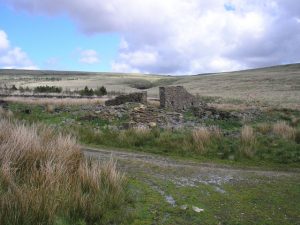
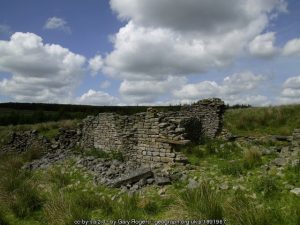
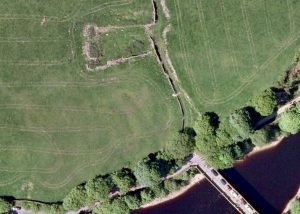
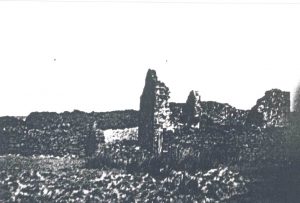
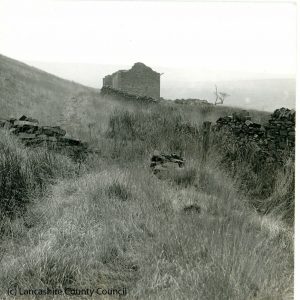
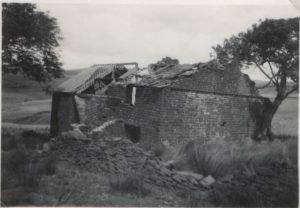
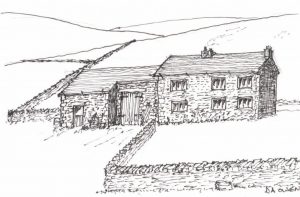
Anglezarke Moor is scattered with the remains of old farmsteads, their stones slowly sinking into the landscape and fading from the maps as surely as they’ve faded from memory. This is the largest section of the site, and it continues to grow as new discoveries are added.

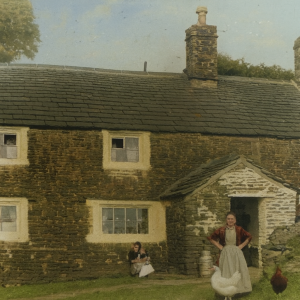
Most of these farms were abandoned in the early 1900s, following an Act of Parliament in 1902. Within just three years, between 1902 and 1905, the Liverpool Corporation acquired the land and cleared every property within the water catchment area. What had once been working homes and barns were deliberately destroyed, leaving only ruins behind.

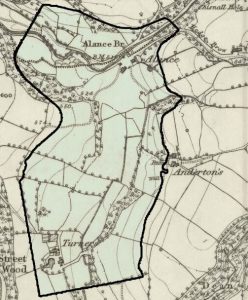
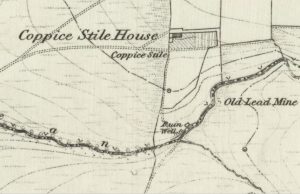
Thanks to painstaking research by Richard Skelton, we now have a detailed list of these lost places, drawn from old maps and records. Names such as Abbots, Alance, Bradley’s, Brown Hill Farm, Drinkwaters, Hempshaws, Hollinshead Hall, Old Rachel’s, and Wilkinson Bullough still echo across the moor, even though many of the buildings have long since crumbled. Some ruins were already rubble when the earliest maps were drawn, and others survive only in fragments today.

This section of the site is constantly being updated as more information comes to light, ensuring that the stories of these forgotten farms are not lost to time.
Abbott’s

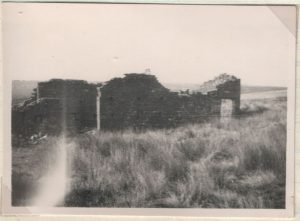
Abbott’s Farm stood on the moors above Anglezarke, close to Lead Mines Clough. The name derives from the Abbott family, who were long associated with the area and with the church at Rivington. Richard Abbott was one of four Puritan ministers of Rivington between 1647 and 1662. Earlier records show him as churchwarden in 1625, …

Anderton’s

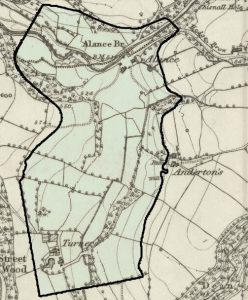
Anderton’s was one of three farms affected by the creation of Yarrow Reservoir. Unlike the others, it escaped complete destruction, with ground evidence still visible today. The farm is believed to have existed as far back as 1610, when the Rivington Muniments record James and Jennet Anderton living on Anglezarke Moor. At that time they …

Brook House

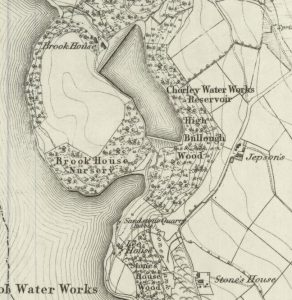
Brook House stood by High Bullough Reservoir, also known as Chorley Reservoir. It occupied an idyllic spot in a secluded valley beside the small reservoir, which is no longer in active service. Some accounts claimed the house was destroyed during the reservoir’s creation, but this was not the case. The property was known to have …

Brown Hill

Brown Hill Farm was one of the earliest recorded farmsteads in Anglezarke. The name appears in the earliest known grant of land in Rivington, around the year 1250. Local records state: “Simon of Rivington grants all of his land in Winterhold to William of Brownhill.” Winterhold is believed to have been the name of the …

Fogg’s

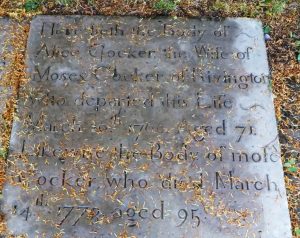
Fogg’s Farm stood near Peewet Hall on the Anglezarke moors. The property was farmed by members of the Cocker family in the 1700s, including the famous Moses Cocker, remembered for his flying machine. At that time, the farm comprised thirty‑four acres. By 1824, Thomas Pilkington was resident at Fogg’s. The Pilkingtons also lived at Drinkwaters, …

Hempshaw’s

Hempshaw’s is said to be a corruption of Helmshaw’s. The valley here was described as the hamlet of Helmshawsyde in a document dated 1520, and Helmeshawes in 1566. The earliest mention of the spot is Elmshaw about 200 years before, which may describe the valley as “a small one where elm trees grow.” The name …

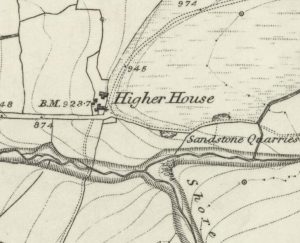
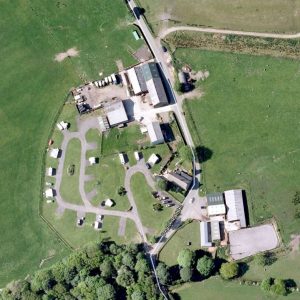
Higher House

Higher House Farm was a substantial upland holding, complete with barn, stables, and shippons (cow barns). It stood on the moors above Anglezarke, with ruins visible on both sides of the road. The name reflects its position above Lower House, which lay further down the slope. The farm track from Higher House led to a …

Latham’s (Wilcock’s)

Latham’s Farm stood on Dean Head Lane, Rivington, later incorporated into the grounds of Wilcock’s Farm campsite. The Bolton Chronicle of 20 October 1860 reported the sale of farming stock, equipment, and furniture at Latham’s by William Barlow. Two years later, in July 1862, the site was advertised to be let by ticket on 12 …

Lee House (The Clog Inn)

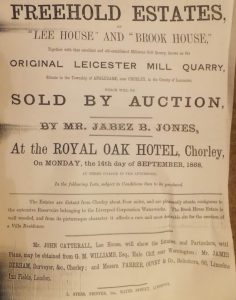
Lee House stood on the Anglezarke Woodland Trail near High Bullough Reservoir. It was also known as The Clog Inn, a nickname that reflected its reputation as a local public house. The property was tied to Lester Mill and the surrounding industry, serving as a hub for quarrymen and farmers. The sale of Lee House, …

Margery’s Place (Gir Nest)

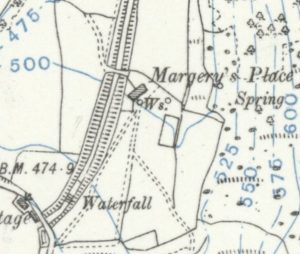
Margery’s Place ties together several old names. It was known as Garnet’s, then Gernest Bullough, evolving to Gernest and Gir Nest. On the 1847 Ordnance Survey map it is labelled Margery’s Place. The site was also referred to as Margery’s Mine, describing the coal‑mining activities that took place here. An essay in Chorley Library notes …

Moses Cocker’s

Moses Cocker’s Farmhouse is a Grade II listed building, dated 1693 on the lintel above the door. The stone is inscribed with the initials of Robert Cocker, his wife, and son Moses: “C, over R:A:M, over 1693.” The lintel also bears a carved inverted heart. The house was built by Robert Cocker, whose name occurs …

Old Brook’s

Old Brook’s stands alone on the moors without a track to it today — “which makes it all the better preserved.” The history of this property begins more recently than many others. Nothing is known of the dwelling prior to 1835, when cattle were kept here in the shippons. The ruin is not labelled on …

Old Knowle Farm

Old Knowle Farm stood close to Sheephouse Lane, so near the road that many people will pass by without even noticing it. Though small in size, the farm had its own clean water supply, pouring off the slopes of Winter Hill before feeding into the River Yarrow. The farm appears on the OS 6‑inch original …

Old Rachel’s

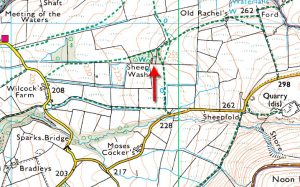
This was a large farm, and is one of the more prominent and well-known ruins on the moors. It’s name still features on maps today, even though there is precious little of the buildings remaining. It was known also as Old Racket’s in the early days. Possibly the most enigmatic ruins of the moors, with …

Parsons Bullough

Parson’s Bullough lies near Lead Mines Clough, on the track that once led to the abandoned hamlet of Alance, now beneath the waters of Yarrow Reservoir. The name was taken from “Bula,” a surname, and “haugh,” meaning “flat land near a river.” Many of the farmers around here were Flemish, having fled from the 1572 …

Peewet Hall

The ruins of Lees became known as Snapes, and later as Peewet Hall. There was also a separate residence called Lee House. A Peewet is an old name for a lapwing, and “there are still many of these birds around the area.” The original OS mapping shows a modest‑sized property, “certainly not a hall of …

Simms

Simms is one of the most remote ruins on the Anglezarke moors, lying south on the banks of the River Yarrow. The name is believed to be a shortened form of Simson, although George Birtill in his book Heather In My Hat suggested that “Simms = Son of Simon, possibly Simon De Knoll who was …

Stones House

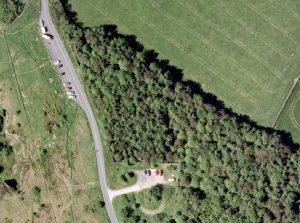
Stones House is closely associated with the quarries of Anglezarke. Today, the site lies beneath a modern car park near the Anglezarke viewpoint, but in earlier centuries it was a hive of industry, particularly during the construction of the reservoirs. The earliest known inhabitant was Thomas Shaw in 1625. The Shaw family owned extensive land …

Stoop’s

Stoops was one of the smaller dwellings on the Anglezarke moors. The name likely refers to its position near a bend in the brook, where the cart road passed by. The barn was an extension of the house, much like Old Rachel’s and Wilkinson Bullough. A footpath that runs just west of the site was …

Turner’s

Turners Farm once stood at the southern end of what is now Yarrow Reservoir. The name survives today in Turner’s Embankment, though the farm itself was swallowed up when the reservoir was constructed. Old maps preserve its outline, and even the punctuation of the name varied over time, reflecting the inconsistent use of apostrophes in …

Unfinished

The “Unfinished” page gathers together several ruins where fragments of information survive but not enough to warrant a full entry. These sites remain part of the wider Anglezarke story, each with its own character and traces of history. Though incomplete, they offer valuable glimpses into the lives of families and farms now long gone. Drinkwaters …

Wilkinson Bullough

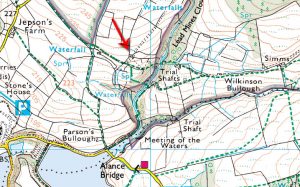
Wilkinson Bullough was one of the oldest farms on the Anglezarke moors. Records show it was standing at least as early as 1626, alongside other ancient homes such as Jepson’s, Higher Bullough (Manor House), and Stones House. At that time, the property was written into the will of John Bulhaugh, confirming its existence in the …