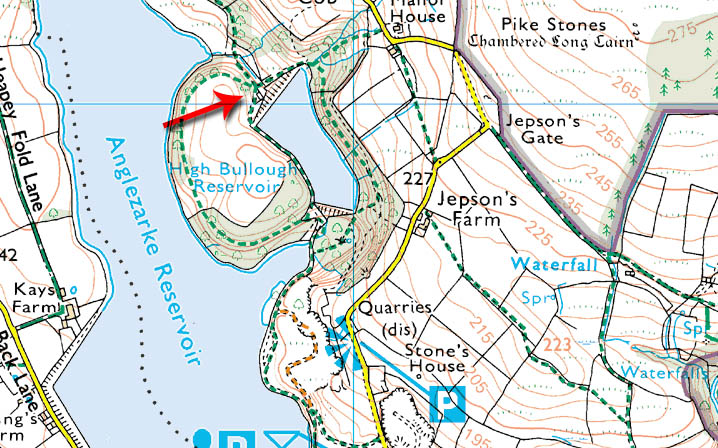
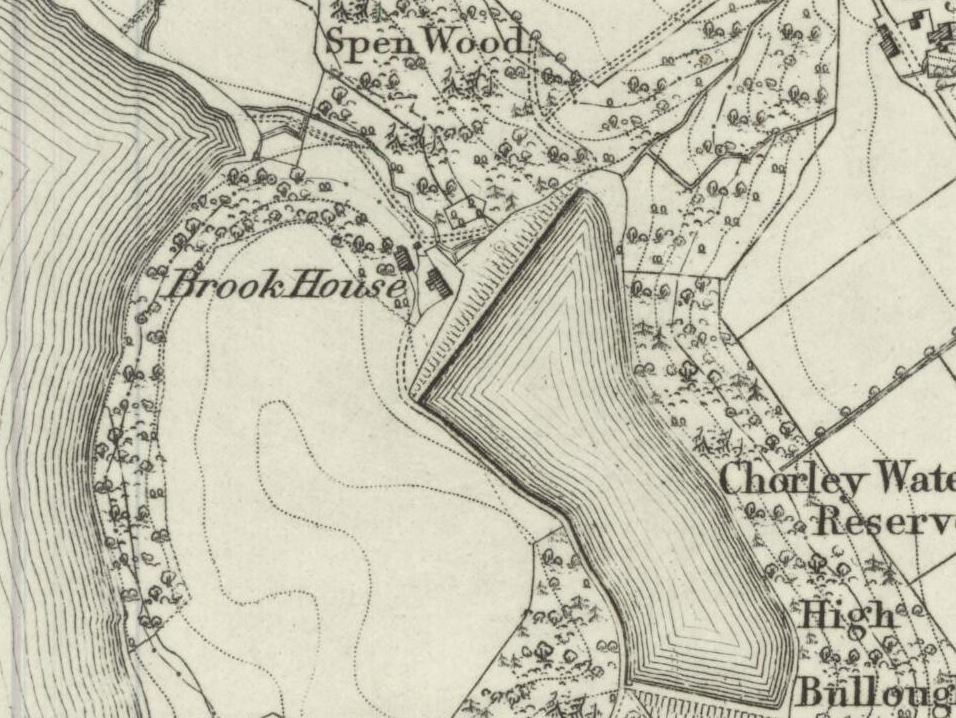
Brook House stood by High Bullough Reservoir, also known as Chorley Reservoir. It occupied an idyllic spot in a secluded valley beside the small reservoir, which is no longer in active service. Some accounts claimed the house was destroyed during the reservoir’s creation, but this was not the case.
The property was known to have been created during or slightly before 1673. One of the earliest inhabitants was John Morres, recorded as living there in the early 1700s. He, along with several trustees, paid “£2. 10s. 0d. to a John Andrews of Little Lever for land overlooking Rivington Village Green.” Together they founded the Presbyterian Chapel on that land, intended for free religious worship by Protestant dissenters from the Church of England.
Families & Residents
John Morres remained at Brook House until his death. A gravestone in the parish churchyard overlooking the reservoirs records: “John Morres of Anglezarke died on the 15th October, 1703, at 58 years of age.” He had a daughter, Ann, who died on 9 October 1678, probably not yet a teenager. It is likely that John, his wife, and Ann all lived at Brook House together.
Later census records show shepherds living at the property in 1851 and 1861. By 1881, quarrymen were in residence, reflecting the shift in occupations as reservoir construction reshaped the local economy.
Farming & Daily Life
Brook House comprised a farmhouse, cottage, barn, meadows, pasture, woods, a croft, and a garden. Plans from 1835 confirm the presence of a cattle barn (shippon).
The property was auctioned in the mid‑nineteenth century, with the description noting: “The estates are distant from Chorley about Four miles, and are pleasantly situate, contiguous to the extensive Reservoirs belonging to the Liverpool Corporation Waterworks.
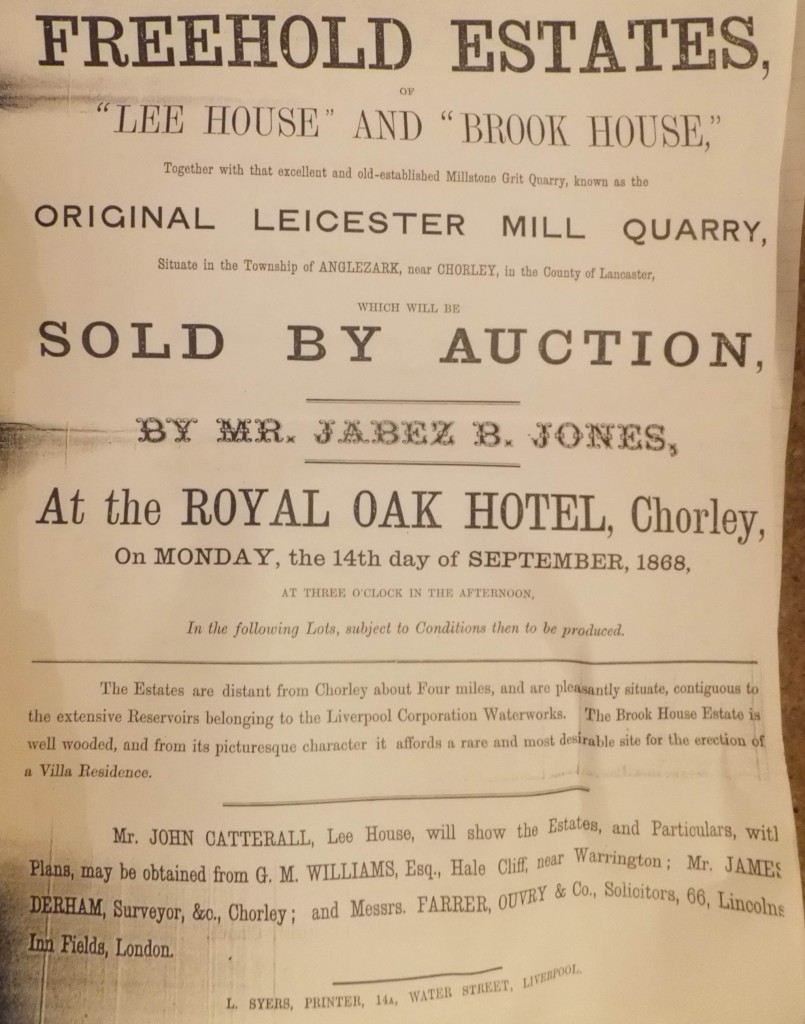
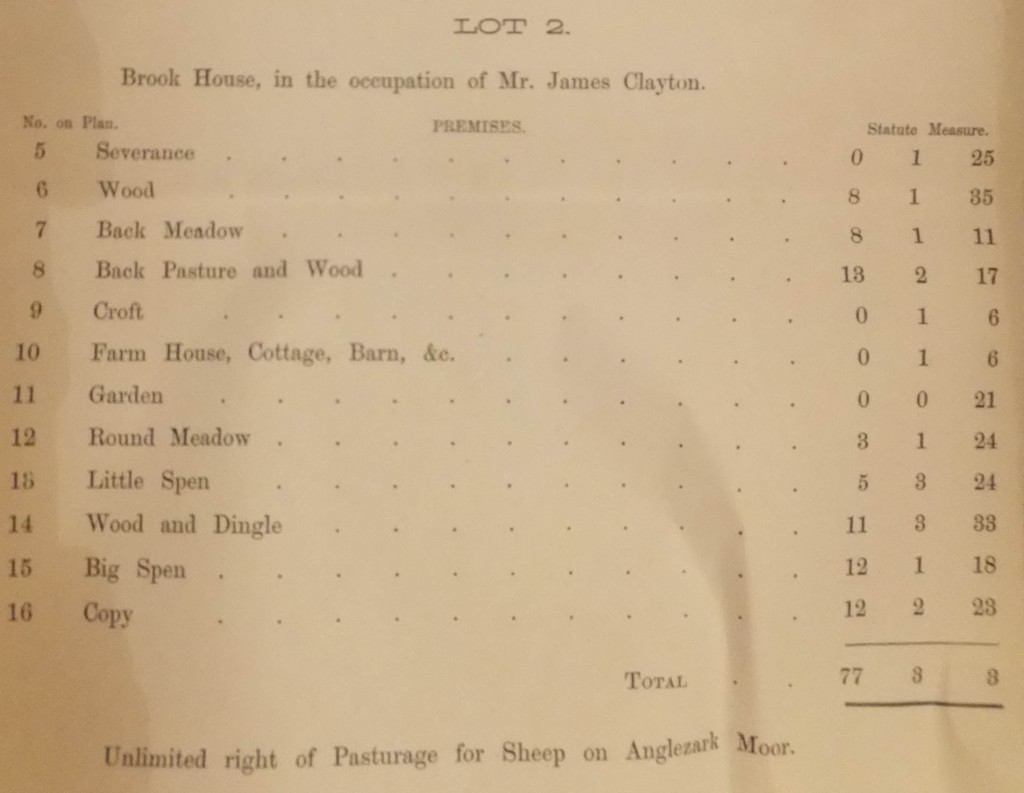
The Brook House Estate is well wooded, and from its picturesque character, it affords a rare and most desirable site for the erection of a Villa Residence.”
Architecture & Features
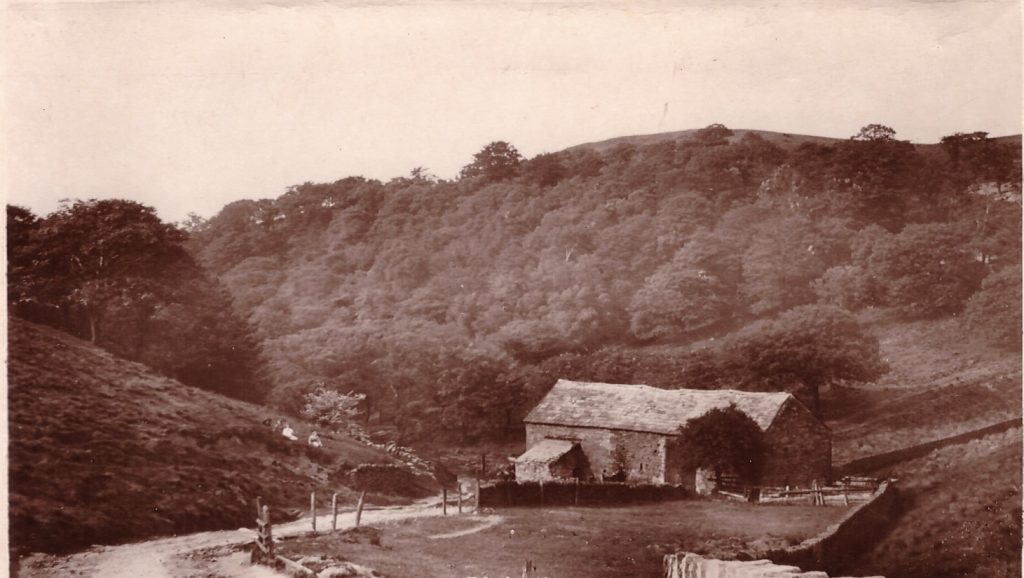
Photographs survive showing Brook House with the reservoir embankment to the right and the footpath to the left, still in use today.
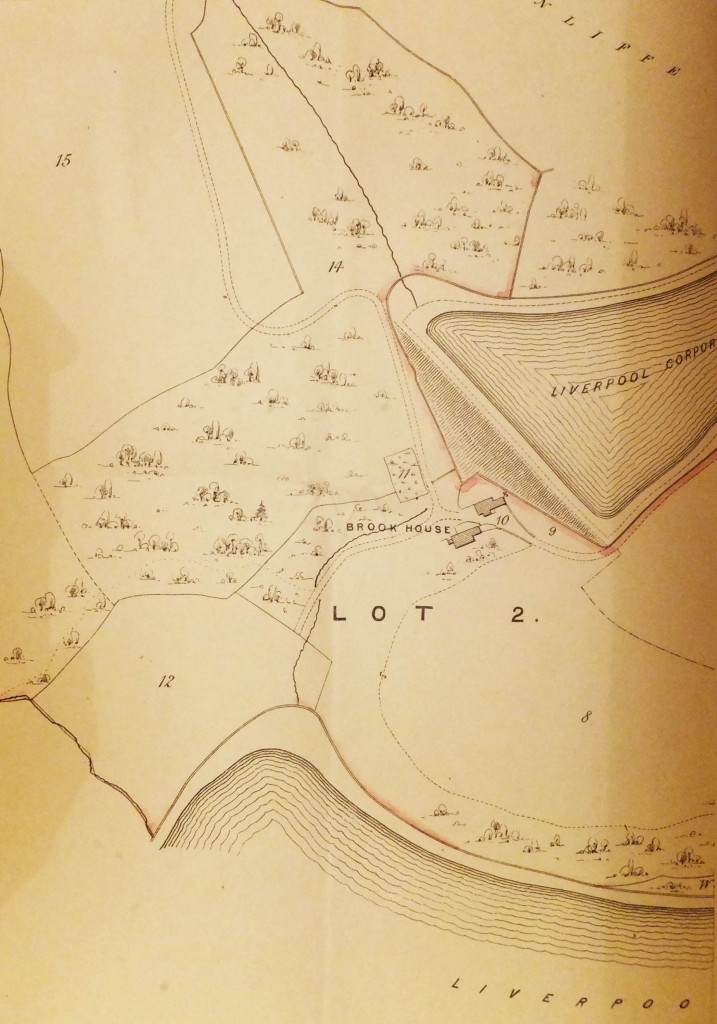
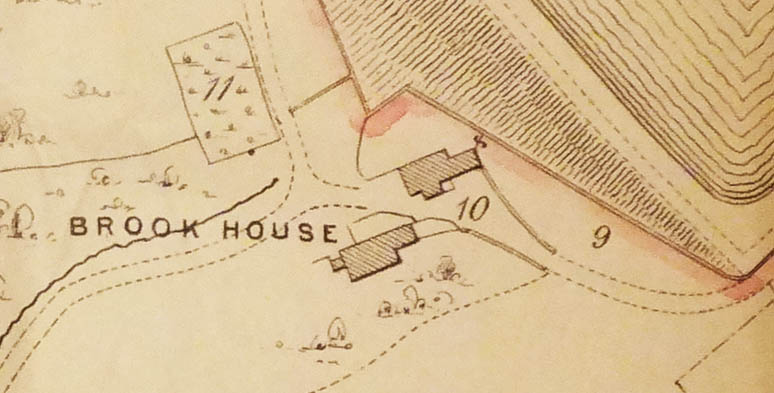
The lambing croft is visible in the foreground, enclosed by fenceposts and a wall. Auction maps and plans detail the layout of the farm, with numbered references linking features to their descriptions.
William Fergusson Irvine’s 1904 book A Short History of the Township of Rivington in the County of Lancaster with Some Account of the Church and Grammar School preserves a transcript of the chapel contract, including the clause:
“Whereas a Chappel or Oratory of four bayes of building is lately erected and built by several Protestants dissenting from the Church of England upon a certain plot or parcel of ground… intended to be a place for Religious Worship only, and for an assembly and meeting of a particular Church or Congregation of Protestants dissenting from the Church of England, for the free exercise of their Divine Worship therein…”
Decline & Ruin
Construction of High Bullough Reservoir began in 1850 under the Chorley Water Company, headed by John Frederic Bateman. Seven years later, Liverpool Corporation arrived and began building the larger reservoirs still visible today. Despite this, Brook House survived into the late nineteenth century, only later falling into ruin. By the time of the auction, the property was still described as a going concern, though its fate was sealed by the expansion of the waterworks.
Present Day
The site of Brook House is now part of a nature reserve incorporating the reservoir. Deer are occasionally seen in the area, though sheep are the more common occupants. The outlines of the farmstead remain visible, and the footpath that once passed its door continues to guide walkers through the valley. Brook House endures in photographs, maps, and gravestones, its story tied to the creation of reservoirs and the founding of a chapel that shaped the religious life of Rivington.