Brown Hill Farm was one of the earliest recorded farmsteads in Anglezarke. The name appears in the earliest known grant of land in Rivington, around the year 1250. Local records state: “Simon of Rivington grants all of his land in Winterhold to William of Brownhill.” Winterhold is believed to have been the name of the northern portion of Rivington, and some have wondered whether this formed the origin of the name Winter Hill, or whether they were separate parts of a larger area.
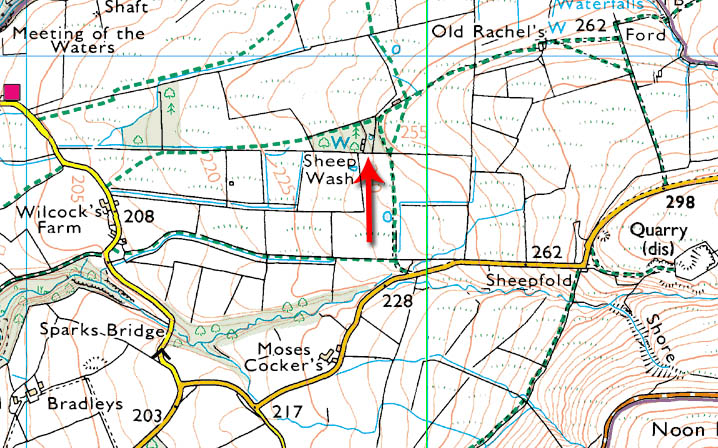
The farm stood on upland ground, offering fine views across the moors. A dated stone was once built into the house, inscribed with the initials “I & A” beneath the letter “N” and the date 1734. Tracing these initials through local records suggests they belonged to John Nightingale and his wife Anne (or Alice).
Families & Residents
John Nightingale was one of the trustees of the non‑conformist chapel in 1737, alongside Moses Cocker. He was buried in the Parish Church at Rivington on 12 December 1744.
Later records show other families tied to Brown Hill. An 1836 Poll Book for Rivington lists James Halliwell as living at the farm and occupying 36 acres of land. A descendant has confirmed: “I believe him to be my 3rd great grandfather.”
Farming & Daily Life
Brown Hill was a working farm for centuries. The spring water here was highly regarded, and a pipeline was laid to carry it to Wilcock’s Farm. Further up the hill, towards Hempshaw’s, lies the “Churn Pit,” still visible today. This was likely used for dipping sheep, with water collected to drive a wheel that turned the churn — a labour‑saving use of natural resources.
Architecture & Features
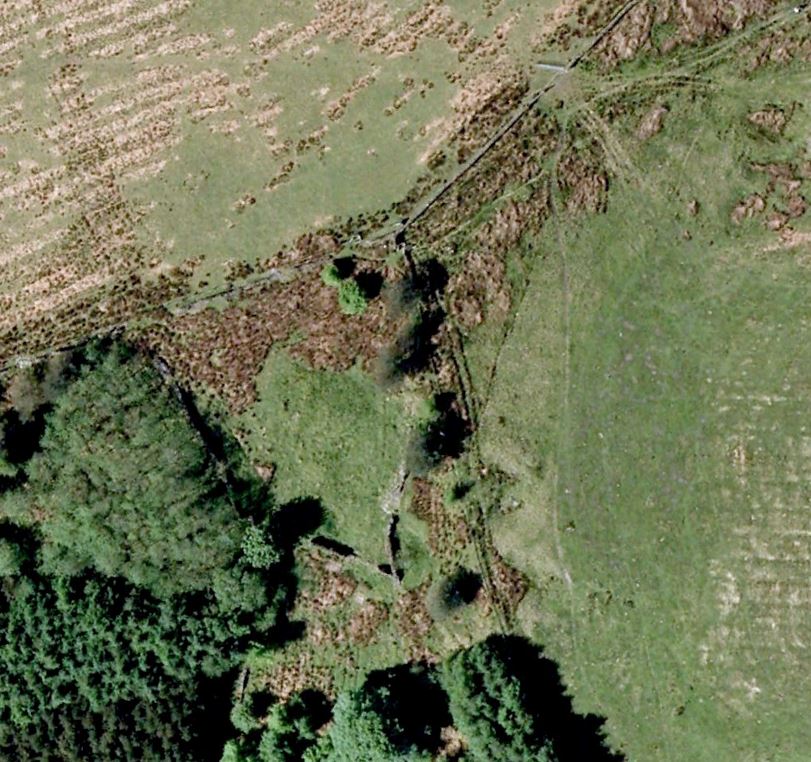
The dated stone of 1734 clearly refers to a replacement building, suggesting the original farmstead was much older. The woodland around the farm has thrived, and aerial surveys confirm the outlines of the property.
In the 1930s, the occupier of Wilcock’s Farm recalled that the stones from Brown Hill were removed to make or repair one of the reservoirs. Contractors ran bogeys on tram lines to carry the stones away, dismantling what remained of the house.
Decline & Ruin
By the twentieth century, Brown Hill was already sparse and ruinous. The removal of its stones for reservoir construction accelerated its decline, leaving only fragments of walls and foundations.
Present Day
Today, Brown Hill Farm is a ruin, though the woodland around it is thriving. The site remains an interesting spot to explore, with fine views across the moors. The outlines of the farmstead can still be traced, and the story of its families — from William of Brownhill in 1250 to James Halliwell in 1836 — continues to anchor it in the wider history of Anglezarke.