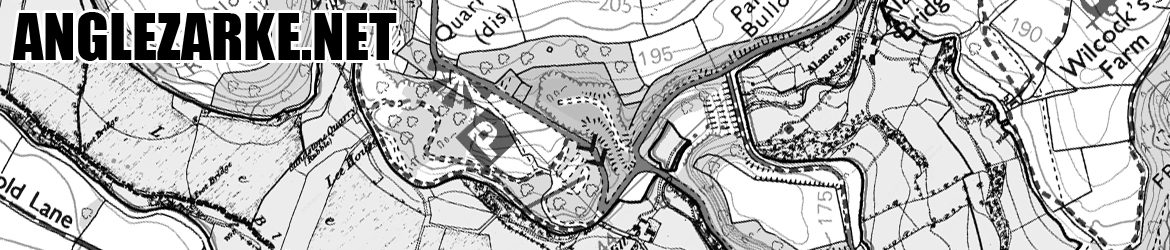
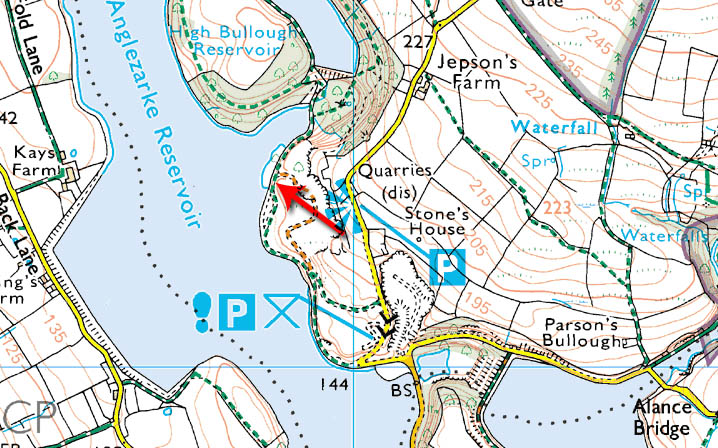
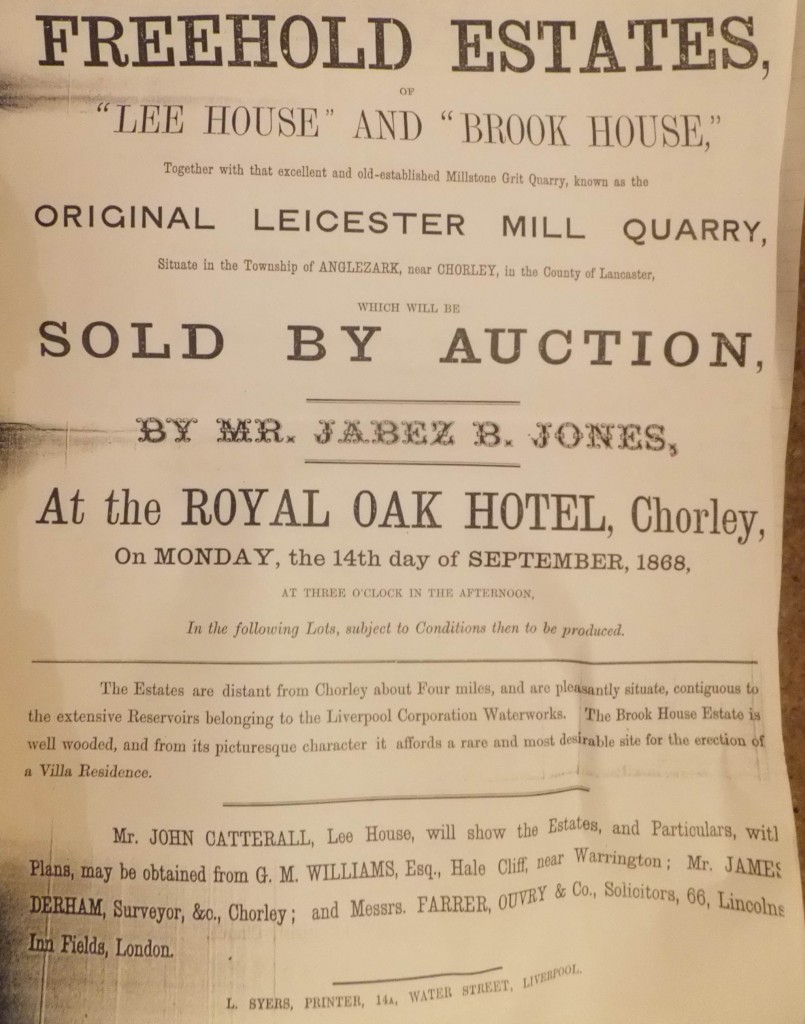
Lee House stood on the Anglezarke Woodland Trail near High Bullough Reservoir. It was also known as The Clog Inn, a nickname that reflected its reputation as a local public house. The property was tied to Lester Mill and the surrounding industry, serving as a hub for quarrymen and farmers.
The sale of Lee House, along with Brook House and Leicester Mill Quarry, took place on 14 September 1868 at the Royal Oak Hotel, Chorley. The auction listed “Lee House, Brook House, Stones House and Jepson’s Farm” as lots, confirming its importance within the local estate.
Families & Residents
Records suggest that James Catterall was resident at Lee House during the mid‑nineteenth century. He married Mary Baxendale here, and together they had three children — Sarah, Ralph, and Caroline.

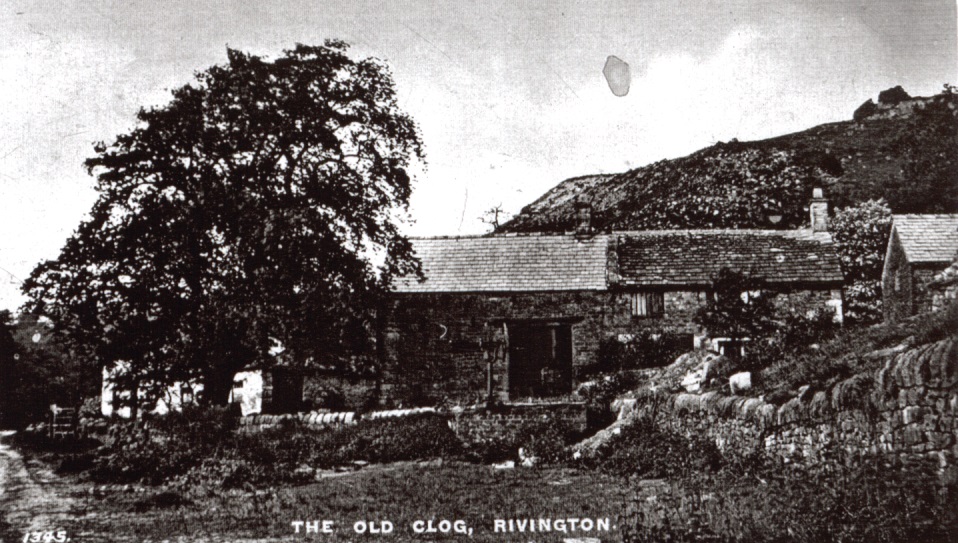
The inn itself was remembered as “an inn of some repute,” with locals gathering in what was likely a converted hay barn or shippon. The building was part of a row that included both the farmhouse and the pub.
Farming & Daily Life
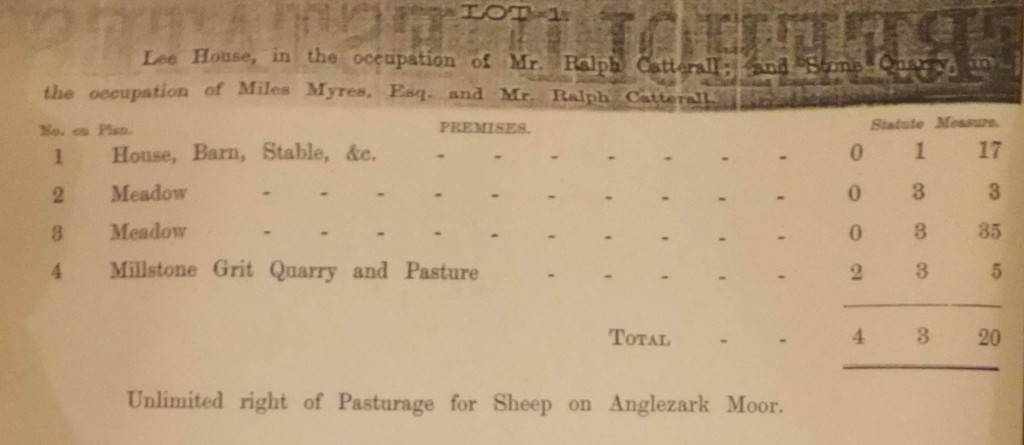
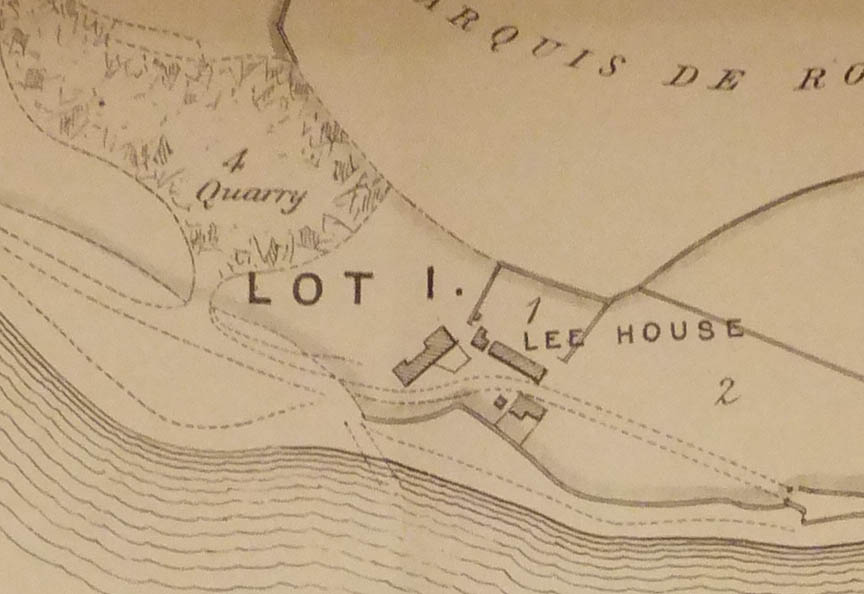
Lee House comprised a house, barn, and stable, along with two meadows, a millstone grit quarry, and pasture land. A close‑up of the auction map shows “a track running through the centre of the farm, and three larger buildings, with two smaller outbuildings.”
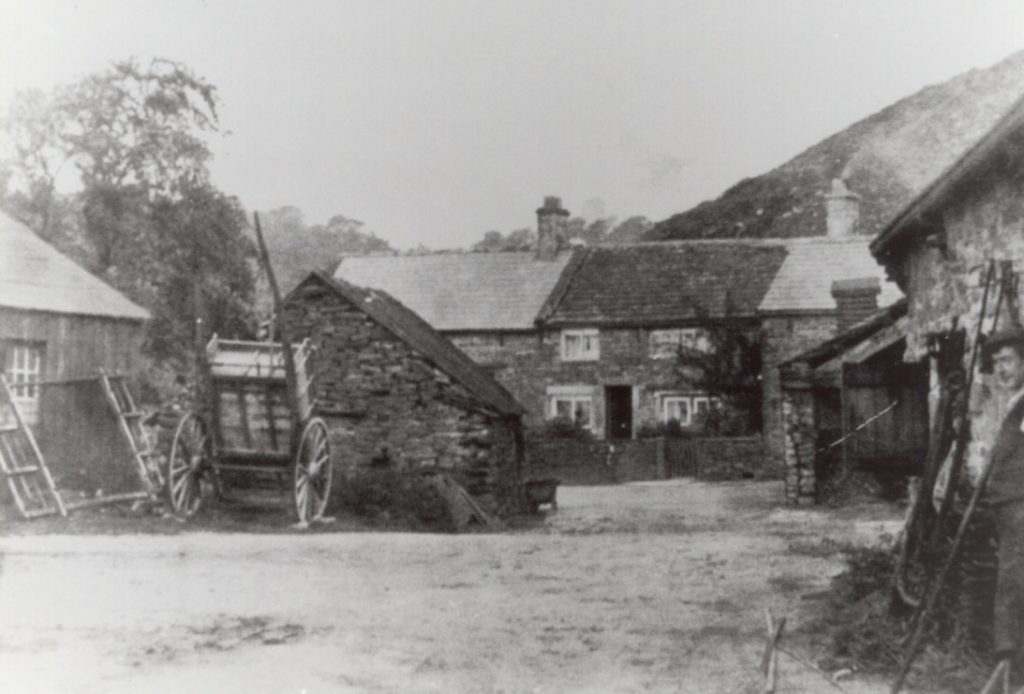
An old oak tree stood by the track on the reservoir side, known locally as Old Tom. Around 1880, the wheelwright nailed apparatus onto the tree as a jig for forming cartwheel hoops. The tree was felled in 1995, but locals recall that “the fallen oak is still there.”
Architecture & Features
The auction map of 1868 is the only known surviving plan of Lee House. It shows the layout of the farmstead and its outbuildings. The bottom L‑shaped building was identified as the wheelwright’s shop.
The largest of the buildings included the pub known as The Clog Inn. Oral tradition describes it as “a converted hay barn or shippon,” adapted to serve both as a dwelling and a place of refreshment for quarrymen and farmers.
Decline & Ruin
By the late nineteenth century, Lee House was already in decline. The National Archives record its sale, though the documents themselves are only viewable at Chorley Library.
I asked the library assistant if I could perhaps look at some original documents, and before long, I was wading carefully through huge boxes of original plans from 150 years ago.
The farmstead was eventually abandoned, and by the twentieth century only ruins remained. The oak tree Old Tom survived until 1995, but the buildings themselves had long since collapsed.
Present Day
Today, Lee House is a ruin on the Anglezarke Woodland Trail. Walkers can still trace the outlines of the farmstead and imagine its past life as both farmhouse and inn. The story of The Clog Inn survives in maps, auction records, and oral tradition, a reminder of the families and workers who once gathered here.
